
Chapter 7: Rebuilding My Pantry: How I Transitioned to a Lectin-Free Kitchen
By the time I discovered the Plant Paradox diet and began cutting lectins from my meals, I had to completely reimagine my pantry.
This was hard.
When you first make the shift from a “normal” diet to a lectin-free one, it’s like learning how to cook all over again. Overnight, so many of the foods that had been my comfort staples — pasta, rice, potatoes, grits, tomatoes, flour, waffles, brats, pancakes, bread, lunch meat, tortilla chips, cereal, oatmeal, peanut butter, crackers, bagels and cream cheese, peppers, ice cream, milk products —were suddenly off the list. At first, it was disorienting. I wasn’t just tweaking recipes; I was rebuilding my relationship with food from the ground up. I also had to make sure I was getting enough calories each day, and the right nutrients! I was learning about things like carbs, protein, and fats, vitamins like C, A, K, and D. (As I’ll share in a later blogpost, I actually became malnourished while on the Plant Paradox diet, and started having electrolyte imbalances).
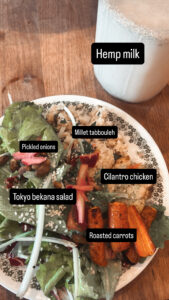
I eventually learned how to make lectin free feel elevated and fun!
And because my gut symptoms were so severe, I didn’t have the luxury of phasing out slowly. I had to go all in—cold turkey. That made the change both abrupt and overwhelming. Suddenly I couldn’t have my favorite pasta dinners or the roasted potatoes I served with almost everything. Even fruit was out. What was left? What would dinner look like now?
The first few weeks felt like standing in front of my pantry and seeing a wall of “No.” But with time, experimentation, and a lot of trial and error, I started finding my new “Yes.” I bought a LOT of weird ingredients from Amazon along the way to try them out. Some of them stuck. Some of them haven’t. Slowly, I built a new repertoire of foods and flavors and new favorite recipes.
Today, a year later, I can honestly say I feel at home in my lectin-free pantry. I still miss eating the foods my family eats — like ice cream and popcorn! But I’ve also found alternatives and substitutions for many of my old comfort meals. I’ve learned which ingredients I reach for every single week, and which ones—despite my best intentions—are still collecting dust in the back of the cupboard. (And that’s okay! Trial and error and “wasting money on ingredients to learn” is part of the process, so expect that to happen.)
If you’re beginning your own lectin-free journey, I want to prepare you: this transition can be tricky at first. There will be resistance. There will be confusion about what you can eat and where to find certain products. You will be skeptical that you can find recipes that taste good without sugar. But it does get easier—and eventually, it becomes second nature.
That’s why I wrote this chapter of my gut healing story. I want to give you a shortcut through those first few confusing weeks—to help you stock your shelves with the items that made the biggest difference for me. These are my go-to ingredients—the ones I now use almost daily—and I’ll share exactly what I use them for the most, where I buy them, with links to make your life easier.
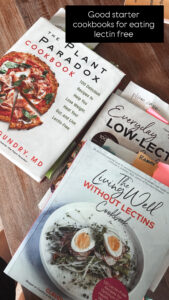
Cookbooks like these are a great starting point
But before we get into my pantry staples, let me point you to a few resources that helped me get my footing when I was first learning to cook lectin-free. These three cookbooks were absolute lifesavers in the beginning:
-
The Plant Paradox Cookbook by Dr. Steven Gundry — the foundational guide straight from the source.
-
Each of these showed me some new “classic” recipes and ingredients that I have used to piece together my weekly meal plans. Things like:
- Vegetable Spring Rolls with Nori Sheets
- Omelettes for Breakfast with greens and avocado
- Burgers in a salad wrap
- Chicken salad with avocado mayo, slaw, in cassava flour tortillas
- Millet or Fonio Porridge with almonds, fruit and coconut milk
- Granola made with Tigernuts and goat milk yogurt
- Mocha shakes with coconut milk, coffee, collagen peptides, monkfruit
- Cassava flour pancakes or waffles
- Muffin in a mug “cakes” that taste like french toast
- Salmon, baked fish, cauliflower rice, veggie latkes with goat yogurt or coconut yogurt
- Smoked salmon rolled with avocado for breakfast
- DIY nut butters with raw kohlrabi, jicama, carrots or celery
- Mashed cauliflower with arugula pesto — OMG so good
- Roasted chicken, chicken wings, meatloaf, sardines
- Vegetable curries
- Fancy-pants salads with homemade dressing and toppings
- Homemade sweet potato crackers (that Josiah loves to eat too) with Kite Hill almond cream cheese
Now that you have some tools to get started, let’s dive into the part you’re probably most curious about: the ingredients that have become the backbone of my lectin-free life. Use this as a starting point as you explore the most helpful ingredients…
My Lectin-Free Pantry Staples
When I first started my lectin-free journey, my pantry looked like a ghost town. I had pulled out almost everything I used to cook with — pastas, beans, lentils, tomatoes, rice, potatoes, even “healthy” oats — and suddenly realized I had no idea what to make for dinner.
If you’re just getting started, it’s normal to feel that sense of panic. But once I discovered a few key replacements and new favorite meals, the overwhelm faded. These are the ingredients I now keep stocked year-round, because they show up in a lot of my new “favorite” go-to meals. They make cooking simple, satisfying, and completely lectin-free.
Note: this list does contain Amazon affiliate links and if you purchase using my link, I will receive a commission. Thank you.
 🥤 Everyday Drinks & Beverages
Hydration and comfort drinks are big for me — they make this lifestyle feel sustainable and enjoyable.
-
San Pellegrino Sparkling Water – My favorite daily drink. I often add lemon, lime, or a splash of apple cider vinegar — it tastes a bit like a mini Coke! I buy a case of this at at a time at Costco.
- Bone broth — I make my own from our pastured chickens. I sip this every day, and it’s been instrumental in rebalancing my electrolytes (which gave me some trouble when I shifted my diet so dramatically). When I run out of this, I make it a priority to have some chicken SO THAT I can make the broth.
-
Apple Cider Vinegar (distilled) – I use this in sparkling water, salad dressings, or to kick-start digestion before meals. I buy the distilled version because I have a food sensitivity to brewer’s yeast (which includes vinegars). If you don’t have that sensitivity, you should buy the kind that has the “mother” floating in it. It will jumpstart your gut buddies.
-
Coconut Water – A great source of potassium and electrolytes, especially if you’re easing off sugar.
- Mooala Almond Milk – I have to watch my coconut milk intake (because it raises your LDL), so I love this gum-free almond milk
- Pecan Milk – I use Pecana brand, which I find in the drinks aisle at Walmart
-
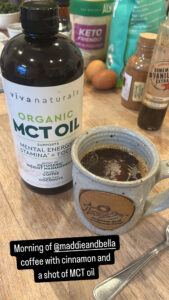
Coffee (occasional treat) – I technically have a sensitivity to coffee, but every now and then I treat myself to a small cup. You can try mold-free brands if you’re experimenting. I use a French Press. Then blend it with a tablespoon of ghee and a shot of MCT oil, plus some vanilla extract, grass-fed hydrolyzed collagen pepties, and cinnamon. The blending action is important. I have this as my first drink of the morning, and it helps me stay in ketosis until I break my fast around 11 AM.
-
MCT Oil – A scoop in my morning tea or coffee helps me stay full and supports energy. 👉 [Buy on Amazon]
🥜 Nuts, Seeds & Nut Butters
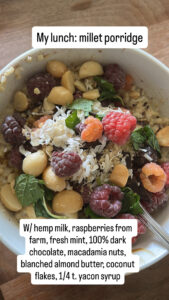 Nut butters became my comfort food. I use them with fresh veggies or in desserts — they make me feel like I’m not missing out.
-
Pecans & Walnuts – I make my own nut butters from these two. I soak the walnuts several times to remove the tannins that make my mouth sore. (Google it. It works).
-
Macadamia Nuts – My body digests these beautifully. I order them from Amazon and snack on them daily. 👉 [Buy on Amazon – affiliate link]
-
Pistachios, Hazelnuts, and Blanched Almonds – Make sure the almonds don’t have skins to reduce lectins.
-
Homemade Sesame Salt – Made from sesame seeds and sea salt — I sprinkle it over salads or my nori rolls.
-
Hemp Hearts (or Hemp Seeds) – I make hemp milk weekly. Great protein source and super creamy.
-
Flaxseed – My egg substitute! Mix 1 tbsp ground flax with 3 tbsp water for “flax eggs.”
-
Nut Butters (Macadamia, Pecan, Walnut) – Either homemade or clean brands from Amazon. I eat them every couple of days with raw jicama or kohlrabi sticks. If you don’t know how to make your own nut butter, you need to learn this skill now. All the nut butters on the market use some kind of bad seed oil like grapeseed, sunflower, safflower, canola, etc. When you make it yourself, there ARE NO OILS. And you can control the amount of salt you add.
- Basil Seeds — because chia seeds have lectins, these are the perfect alternative! Same great fiber and thickening ability
🍳 Proteins: Fish, Meat & Eggs
Quality protein is crucial for healing. I focus on clean, pastured, grass-fed, and wild-caught sources. In my early months I didn’t think grass-fed mattered so much. It wasn’t until 9 months in, when I committed to ONLY grass-fed that I saw a shift in my aching joints and pain.
-
Wild Alaskan Salmon – I buy from Citizen Salmon Alaska. Packed with omega-3s.
-
Smoked Salmon – My go-to breakfast: wrapped around avocado slices with sea salt.
-
Sardines in Water – A calcium and omega-3 powerhouse. I eat a tin twice a week. I don’t take calcium supplements because eating sardines a few times a week (and lots of greens) does the job.
-
Grass-Fed Beef – Easy to digest, high in nutrients.
-
Pastured Poultry – Chicken and turkey from local farms when possible.
-
Ground Pork (additive-free) – For making my own breakfast sausage.
-
Pastured Eggs (yolks only) – From our own hens! The quality of the FEED of the chickens matters. Look for pasture-raised over organic or cage-free labels. Eggs used to be one of my daily meals, either as a fried egg, an omelette, a scrambled egg taco with cassava flour waffles or boiled! (I recently discovered I am sensitive to egg whites, so eggs are out for now)
-
Prosciutto (Made in Italy) – A delicious protein snack or wrap filler. Always clean ingredients and aged naturally.
🧈 Oils, Fats & Cooking Essentials
Healthy fats are a cornerstone of the Plant Paradox lifestyle — they heal the gut and keep you full.
-
Ghee – My everyday cooking fat. It doesn’t oxidize under heat and adds rich flavor. I also put it in my Bulletproof coffee each AM. Make sure this is grass-fed! SUPER important. You can find it at Walmart or Aldis or Meijer, too.
-
Extra Virgin Olive Oil – Drizzle it on everything! Salad dressings mostly. I go through this bottle fast.
-
Avocado Oil – My go-to for high-heat roasting
-
Coconut Oil – Used in baking or for quick sautéing.
-
Sesame Oil – Adds depth to Asian-inspired dishes. I add it in at the end of the meal to avoid the high temps. Lots of umami flavor!
-
MCT Oil – Stirred into my morning drink for a clean fat boost and ketones. MCT shows up a lot in the longevity space. You should educate yourself about it.
 🥫 Condiments, Sauces & Flavor Enhancers
These add depth to my meal — and can easily turn a boring “steamed cauliflower” into something exciting with a quick addition.
-
Coconut Aminos – this adds umami to so many things. I use it in place of soy sauce in Asian dishes, and as a sub for Worcestershire sauce. Soy sauce is made from soy — which has lectins — hence the need for an alternative!
-
Dijon Mustard – Essential for my salad dressing recipe.
-
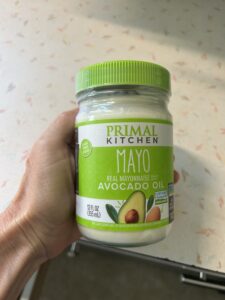
Avocado Mayo – This tastes like mayo, but without the bad seed oils. Primal Kitchen also makes a good version.
-
Balsamic Vinegar & Apple Cider Vinegar – Use distilled versions if you’re sensitive to yeast like I am
-
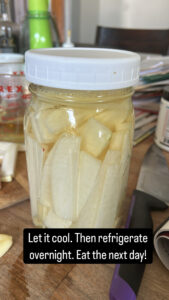
Pickled Onions – Always in my fridge. They add tang and umami to cauliflower rice, burgers, or salads. Claudia has a great recipe I use in one of her cookbooks.
-
Pickled Radishes — always in my fridge
-
Kimchi, miso, or lacto-fermented sauerkraut — because of my sensitivity to brewer’s yeast, I can no longer do this, but they are awesome!
-
Vanilla Extract – I make my own for clean flavor.
-
Pesto — I always make my own and then freeze it for later one-time use
-
Cinnamon – I add this to my “muffin in a mug” breakfasts — my version of a healthy French toast.
- Fresh herbs — I use a lot of garlic, oregano, basil, cilantro, dill, sage, thyme, and rosemary.
🍚 Grains & Starch Substitutes
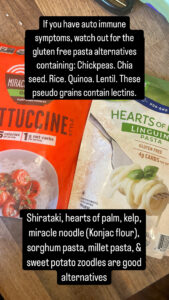 Finding new comfort foods was a journey, but these staples brought satisfaction back to my plate.
-
Cauliflower Rice or Mashed Steamed Cauliflower – My go-to for bowls or side dishes. I steam or sauté it often.
-
Sweet Potatoes – Great mashed or baked. I also make my own sweet potato crackers — perfect with almond cream cheese!
-
Sorghum or Millet Noodles ( or Shirataki Noodles) – A fantastic pasta replacement. You can even find RAMEN versions of these noodles that taste just like the real thing.
-
Palmini Hearts of Palm Noodles – Linguini or lasagna noodles. These taste surprisingly close to pasta. I love them with olive oil, salt, and herbs. I find them in my Meijer grocery store in the pasta aisle
-
Sorghum & Millet – My grain stand-ins. I cook them in the Instant Pot.
-
Fonio – My favorite porridge base. Warm, comforting, and lectin-free.
🥖 Flours & Baking Essentials
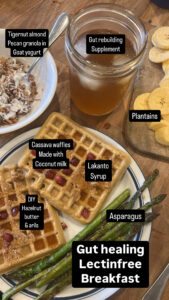 Swapping out traditional flours opened a whole new world of baking possibilities.You Do have to minimize your intake of these daily, because they will turn into glucose/sugar in your body, and can affect your insulin resistance score.
-
Cassava Flour – My #1 baking staple. Great texture and mild flavor. I use this for my waffle recipe.
-
Coconut Flour – For moisture and density in muffins or pancakes. You’ll find this in the baking aisle at every store.
-
Arrowroot Flour/Starch / Tapioca Flour – Adds elasticity in baked goods. These are interchangeable in recipes.
-
Tiger Nut Flour – My secret ingredient for granola and cookies.
-
Almond Flour (from blanched almonds) –– this is used alot in baking recipes. Just make sure they come from blanched almonds to keep it lectin free.
- Dark Chocolate – I use 100% and then sweeten the meal with some allulose
🥬 Vegetables & Everyday Produce
 These are my daily produce building blocks for meals — fresh, light, and easy on digestion.
-
Avocados – I eat one a day. Creamy, filling, and full of healthy fats. Great for potassium.
-
Cauliflower – My most versatile veggie: rice, mash, or roasted.
- Broccoli — I swap this with cauliflower. Try ricing the broccoli, too
- Okra — I make baked okra chips that are like eating potato chips for me!! (Slice them in half, toss in olive oil and kosher salt. Bake)
-
Napa Cabbage – Softer and easier to digest than regular cabbage.
-
Jicama & Kohlrabi – My favorite dippers for nut butters.
-
Collards, Kale, Bok Choy, and Arugula – My rotating greens.
-
Radicchio & Head Lettuce – Always in my salad rotation.
-
Lemons & Limes – For sparkling water or dressings.
-
Frozen Blueberries – The one fruit I eat regularly, year-round.
- Frozen arils (pomegranate seeds) — found in the freezer fruit section at Walmart.
 🍯 Sweeteners & Treats
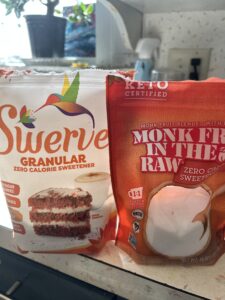
I can’t tell a difference. I do sometimes sweeten my coffee, tea, or granola — and of course I use these in baking.
-
MonkFruit & Swerve – My go-to natural sweeteners. You can find these in the grocery baking aisle
-
Maple Syrup Sub– Lectin-free syrup for cassava flour waffles or pancakes.
-
Carob Chips (Missy J’s) – My substitute for chocolate. I discovered in a recent blood test that I have a food sensitivity to chocolate, so I now have to avoid it. But I have found an alternative in carob chips. I have also made my own carob chips with carob powder!
-
Basil Seeds – I hate to tell you, but chia seeds have lectins in them. I know… I thought they were healthy too. I use basil seeds instead of chia seeds, and I can’t tell a difference. Combine with coconut milk for a creamy dessert.
🧀 Dairy Alternatives & Fermented Favorites
 I have a casein food sensitivity, which I recently discovered in August, 2025, from a blood test. So I currently avoid all dairy until my gut is sealed. Then I’ll try to reintroduce them again and see if I can take it. You probably can manage dairy if it’s from goat or sheep’s milk. Avoid cow milk.
-
Kite Hill Almond Cream Cheese – Perfect on my homemade sweet potato crackers.
-
Plain Unsweetened Coconut Yogurt (So Delicious Brand) – This is hard for me to find as unflavored. You can add vanilla extract or Swerve to sweeten it.
-
Plain Goat Yogurt (at Meijer) – Great for smoothies or parfaits.
-
Manchego (Sheep’s Milk Cheese) – Easy on digestion and wonderfully tangy. Found at Meijer
-
Goat Cheese Chevré – A soft cheese I add to salads and wraps.
- Goat cheese cheddars and goudas. Found at Meijer
- Coconut milk –– this is my go-to sub for milk products in baking. I use Thai Kitchen brand, OR Trader Joe’s
- DIY Hemp Milk – getting hemp hearts to make your own hemp milk in a blender is the way to go!
-
Parmigiano Reggiano – Aged and lactose-free, perfect for finishing dishes.
🌟 Lectin-Free Pantry Specials (Unique Finds)
 Didn’t know where to categorize these.
-
Tiger Nuts – Crunchy and slightly sweet. These are a tuber that your gut buddies love. I use them in my granola recipe.
-
Nori Sheets – For veggie sushi rolls — one of my favorite quick lunches. These are at the grocery store in the International aisle
-
Collagen Peptides (Bulletproof Brand) – Added to my morning drink for joint and gut support.
- Plantain Chips — I find these at Meijer sometimes. They are like $10/bag, but they’re giant strips of plantains cooked in coconut oil — so they’re compliant. And they’re really salty, so I love eating them. It’s my version of potato chips.
- Avocado Mayo – Primal makes a good version. I find this at Meijer by the mayo.
Final Thoughts: Give Yourself Grace in the Transition
When you first start changing your pantry, it can feel like stepping into a foreign country. You’ll wander down aisles wondering, “What on earth can I even eat?” You’ll probably buy a few things you never end up using. You might burn some okra chips or two (I definitely did). And you’ll have days when you miss your old comfort foods.
That’s all part of the process.
Give yourself permission to learn as you go. The goal isn’t perfection — it’s progress. Over time, this new way of eating will start to feel normal. You’ll find your favorite go-to meals. You’ll develop your own rhythm in the kitchen. You’ll walk into your pantry and smile because everything in there supports your healing.
And you’ll start to FEEL BETTER. There is nothing more motivating than actually feeling like your old self again. More energy. More hope.
People often ask me if I ever plan to go back to some of my old foods and way of life “when I’m all healed up.” Honestly?…. no. It was so bad, I have no desire to risk that ever again. Knowing that I am safe-guarding my health and increasing my quality of life as I age is a precious gift for myself.
This is the new me. And I like her.
If I can encourage you with one thing, it’s this: 👉 Don’t give up in the messy middle. Healing takes patience, experimentation, and curiosity. You’ll make mistakes, but you’ll also make discoveries along the way that leave you feeing more powerful and really proud of yourself.
And when you look back months from now — standing in your new lectin-free kitchen, feeling light, calm, and clear — you’ll realize this wasn’t just a pantry makeover. It was a life makeover — a life full of energy, peace, and confidence.
And I promise: it’s worth every swap, every label read, every Amazon order, and every meal learned along the way.
Want to read more?…
Read the previous chapter: Chapter 6: Lectins: What They Are and the Surprising Foods That Contain Them
Start at the beginning: Chapter 1: How I Healed My Gut – The Beginning
Read the next chapter: Chapter 8: How Long Did It Take to Heal My Gut?